SVQ Carpentry and Joinery (Construction) SCQF level 6
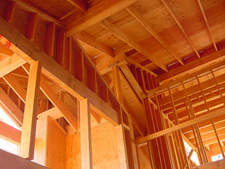
The Scottish Vocational Qualification (SVQ) in Carpentry and Joinery (Construction) at SCQF level 6 allows candidates to demonstrate competence in job-related skills in their particular area of work and expertise.
This qualification covers areas such as general workplace health, safety and welfare; developing and installing first and second fixing components; erecting structural carcassing components; or manufacturing bespoke products.
This qualification has been designed by the CITB to ensure relevance to the sector.
SVQs are based on National Occupational Standards. SQA works in partnership with other organisations to ensure that National Occupational Standards (NOS) are relevant to the current and future needs of Scottish industries.
This qualification is available through employers and training providers.
COVID-19 presented circumstances that required CITB SSC to review the approach for the delivery of SVQ’s and issue a temporary guidance of the consolidated assessment strategy.
Keep up to date with all other Construction SVQ related documents issued by CITB SSC
Use the tabs below to open each section individually. Alternatively you can show all the sections.
Why deliver this qualification
Successful candidates will gain an internationally recognised qualification which guarantees that they have the skills, knowledge and abilities required to carry out their role successfully. Employers will also benefit from their employees being proficient.
Assessment is carried out in the workplace. This minimises any time learners would need to be away from their work.
The SVQ can be offered in any of the following modes:
- full-time
- part-time (for example, day-release)
- open and distance learning
Who does this qualification suit
This SVQ is suitable for:
- learners who may have just left school
- individuals who are currently in employment and who wish to obtain a formal qualification
Access
Entry is at the discretion of the centre.
Candidates should be in a job or placement where they are carrying out relevant tasks and responsibilities which allow them to gather the required evidence.
Progression
The level 6 award could provide progression to:
- SVQ in Occupational Work Supervision at SCQF level 6
- degree level study at a higher education institution
- employment in the Construction sector, perhaps as a carpenter and/or joiner.
Approval
All centres who are looking to deliver the qualification for the first time should come forward for approval by contracting SQA’s Business Development Team for guidance.
Assessors and verifiers must be able to meet SQA’s general requirements for technical/occupational competence as outlined in the Systems and Qualification Approval Guide.
How to assess
For general information on how to assess this qualification, please refer to the document Guidance on how to assess SVQs. For detailed guidance on how to assess this particular SVQ, please refer to the Assessment Strategy.
Where can you take this course?
Qualification content and delivery tools
Current
Information about the qualification(s)
Qualification Structure
Group Award Code: GT56 23
The SVQ in Carpentry and Joinery (Construction): Architectural at SCQF level 6 consists of ten mandatory units and one optional unit.
For details of the units making up the SVQ, please refer to the qualification structure.
- Qualification structure (102 KB)
Group Award Code: GT57 23
The SVQ in Carpentry and Joinery (Construction): Site Carpentry at SCQF level 6 consists of eight mandatory units and two optional units.
For details of the units making up the SVQ, please refer to the qualification structure.
- Qualification structure (99 KB)
National Occupational Standards
Unit information for this qualification is available on our Unit Search.
Core Skills signposting
Core Skills mapping is carried out by the SSC responsible for the development of an SVQ. It is a requirement of Qualifications Scotland Accreditation that every SVQ submission includes information on where possible opportunities for candidates to develop Core Skills exist across the mandatory units.
Centres should note that mapping is not audited or validated against the Core Skills framework/units so is not accepted by Qualifications Scotland awarding body as evidence towards achievement of the Core Skills units.
Modern Apprenticeships
This SVQ is a mandatory component in the Level 6 Construction Building Modern Apprenticeship.
SQA also offers the following components of this Apprenticeship:
| Unit Title | SCQF 3 | SCQF 4 | SCQF 5 | SCQF 6 |
|---|---|---|---|---|
| Core Skills: Communication | F425 04 | F426 04 | F427 04 | F428 04 |
| Core Skills: Numeracy | F429 04 | F42A 04 | F42B 04 | F42C 04 |
| Core Skills: Information and Communication Technology | F42D 04 | F42E 04 | F42F 04 | F42G 04 |
| Core Skills: Problem Solving | F42H 04 | F42J 04 | F42K 04 | F42L 04 |
| Core Skills: Working with Others | F42M 04 | F42N 04 | F42P 04 | F42R 04 |
Information about delivery, assessment, quality assurance and support material
Assessment strategy
Assessor's guidelines
Candidate Guidance and Portfolio
- Information for candidates starting an SVQ (382 KB)
- Candidate Portfolio A4 Cover (118 KB)
- Achievement Record (32 KB)
- Assessment Plan (28 KB)
- Candidate Declaration (26 KB)
- Index of Evidence (27 KB)
- Observation Record (29 KB)
- Personal Profile (28 KB)
- Personal Statement (28 KB)
- Questions and candidate answers (28 KB)
- Unit Progress Record (29 KB)
- Witness Testimony (28 KB)
Adaptations to Conditions of Assessment Request Form
Prior to submitting a request form SQA strongly advise you liaise with the Senior External Verifier for your construction craft area.
Construction webinars
Lapsing
Information about the qualification(s)
Qualification Structure
SVQ in Carpentry and Joinery (Construction) (GM7T 23)
This group award has been replaced.
It enters its lapsing period on: 31 July 2022.
It finishes on: 31 July 2026.
The SVQ Carpentry and Joinery (Construction) at SCQF level 6 consists of five mandatory units and five optional units.
For details of the units making up the SVQ, please refer to the Qualification Structure.
National Occupational Standards
Unit information for this qualification is available on our Accredited Qualification Unit Search.
Unit information for this qualification is available on our Unit Search.
Core Skills signposting
Core Skills mapping is carried out by the SSC responsible for the development of an SVQ. It is a requirement of Qualifications Scotland Accreditation that every SVQ submission includes information on where possible opportunities for candidates to develop Core Skills exist across the mandatory units.
Centres should note that mapping is not audited or validated against the Core Skills framework/units so is not accepted by Qualifications Scotland awarding body as evidence towards achievement of the Core Skills units.
Modern Apprenticeship
This SVQ is a mandatory component in the Level 6 Construction Building Modern Apprenticeship.
SQA also offers the following components of this Apprenticeship:
| Unit Title | SCQF 3 | SCQF 4 | SCQF 5 | SCQF 6 |
|---|---|---|---|---|
| Core Skills: Communication | F425 04 | F426 04 | F427 04 | F428 04 |
| Core Skills: Numeracy | F429 04 | F42A 04 | F42B 04 | F42C 04 |
| Core Skills: Information and Communication Technology | F42D 04 | F42E 04 | F42F 04 | F42G 04 |
| Core Skills: Problem Solving | F42H 04 | F42J 04 | F42K 04 | F42L 04 |
| Core Skills: Working with Others | F42M 04 | F42N 04 | F42P 04 | F42R 04 |
Information about delivery, assessment, quality assurance and support material
Assessor's guidelines
Candidate Guidance and Portfolio
- Information for candidates starting an SVQ (382 KB)
- Candidate Portfolio A4 Cover (118 KB)